Named Lectures
Presidential Symposium - Named Lectures
Sunday, 13 June 2027, 10:30-12:30 (CEST), Main Auditorium
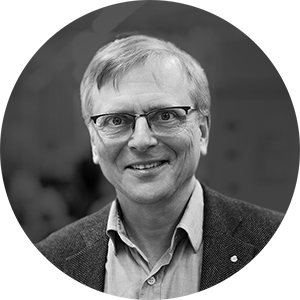
Patrik Ernfors
Brain Prize Lecture
Neurons and circuits of pain
Patrik Ernfors studied molecular biology at the university of Uppsala, received a PhD in neuroscience at Karolinska Institutet in 1991, Stockholm, Sweden. After completing postdoctoral training with Rudolf Jaenisch at the Whitehead Institute, MIT, USA he returned to a faculty position at Karolinska Institutet in 1994. He was appointed professor of Tissue Biology at the Karolinska Institutet in 1999. Among many academic functions, Dr. Ernfors served as head of the Department of Medical Biochemistry and Biophysics, member of the Board of Research at Karolinska Institutet. He received the 2026 Brain Prize together with David Ginty (Harvard U). He is a member of the Royal Swedish Academy of Sciences and the Nobel Assembly at Karolinska Institutet.
His research group studies the ascending and descending neural pathways in the somatosensory system, that underly the ability to sense touch, temperature, itch and pain. He combines molecular, computational and systems neuroscience to establish the neuronal basis and organisation and applies this knowledge to provide insights into the molecular processes that are the cause for chronic pain. His transcriptional classification of sensory neurons provided a foundation for insights into how different neuronal populations are tuned to respond to environmental stimuli and their contribution to sense the world within and around us. The discovery of cross-species homologous cell types of mouse, non-human primate and human has enabled translation into humans of knowledge gained from decades of studies on the rodent as model organism and opened for insights into human physiology and pathophysiology.
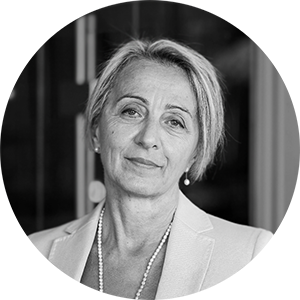
Cristina Tassorelli
Anita Harding Award Lecture
Making science matter: Advancing migraine care through research, education, and leadership
Cristina Tassorelli received her Medical Degree summa cum laude from the University of Pavia, Italy, where she also completed her training in Neurology. She obtained a PhD in Human Psychobiology from the University of Modena and subsequently completed a postdoctoral fellowship at the Department of Neuroscience, University of Rochester, NY, USA.
She has held several leadership positions in national and international scientific organizations. She is a former member of the Board of Directors of the International Headache Society (IHS) and previously chaired the IHS Clinical Trials Guidelines Committee. She served as President of the International Headache Society from 2021 to 2023 and as President of the Italian Association of Full Professors of Neurology from 2022 to 2023. She is also a founding member of the European Headache Alliance.
She has coordinated and participated in numerous competitive research grants funded by the European Union, the Migraine Research Foundation, the Italian Ministry of Health, the Italian Ministry of University and Research, and the Italian Agency for Development Cooperation.
Her scientific activity focuses primarily on headache disorders and translational neuroscience. She has authored more than 500 papers in peer-reviewed international scientific journals, as well as several books and book chapters.
Anita Harding Award Lecture
Anita Harding is considered one of the most outstanding female figures in neurology of her generation, worldwide. The Anita Harding Award has been established to highlight the major achievements of women in neurology. The lecture delivered during the Presidential Symposium will serve as a beacon to inspire younger female neurologists and neuroscientists to pursue their careers, as well as to underscore achievements in and contributions to gender equality in neurology.
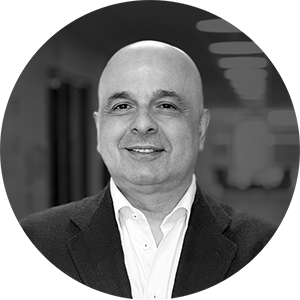
Messoud Ashina
Romberg Lecture
Understanding migraine mechanisms: A translational journey from models to medicines
Professor Messoud Ashina, MD, PhD, DMSci, FEAN, is Professor of Neurology at the University of Copenhagen and Senior Consultant at Copenhagen University Hospital – Rigshospitalet. He directs the Danish National Research Foundation Center of Excellence for Discoveries in Migraine and the Danish National Knowledge Center on Headache Disorders.
Over three decades, Professor Ashina has helped redefine migraine as a biologically tractable neurological disease. He pioneered controlled human provocation models that allow causal mechanisms of migraine to be tested directly in patients, establishing a powerful approach for translating human biology into therapeutic targets. Through this work, his research has identified multiple migraine-triggering signalling molecules and pathways, including pituitary adenylate cyclase-activating polypeptide (PACAP), as well as key intracellular and potassium channel mechanisms involved in migraine generation.
The PACAP programme exemplifies the translational reach of his work. Beginning with the demonstration that PACAP can trigger migraine attacks in humans, the pathway was subsequently validated as a therapeutic target, leading to development of PACAP-targeted treatment that demonstrated preventive efficacy in phase 2.
Professor Ashina has authored more than 470 PubMed-indexed publications and has held leading positions in international neurology and headache medicine, including President of the International Headache Society. He is a Fellow of the European Academy of Neurology, Associate Editor of Brain, and was elected to the Royal Danish Academy of Sciences and Letters in 2025. His career is distinguished by a sustained arc from fundamental human discovery to mechanism-based treatment.
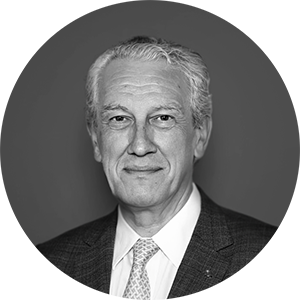
Paul Boon
Golgi Lecture
Epilepsy treatments of the future
Paul Boon is Senior Full Professor of Neurology and Director of Neuroscience at Ghent University, Belgium. He is also Chair of the Division of Head, Movement and Senses, as well as professor of Neuromodulation, at Eindhoven University of Technology. As a board member and former chair of the EAN Programme Committee, he has actively contributed to the annual EAN congresses. He has also previously served as co-chair of the EAN Scientific Panel on Epilepsy, member of the European Journal of Neurology Editorial Board, and as a member of the EAN Scientific Committee. He is a Fellow of the European Academy of Neurology (FEAN).
Prof. Boon’s main neurological interests are clinical epilepsy, neurological sleep disorders, quantitative EEG and MEG analysis, neuromodulation and functional neuroimaging. He founded the 4Brain Laboratory for Clinical and Experimental Neurophysiology, Neurobiology and Neuropsychology at Ghent University.